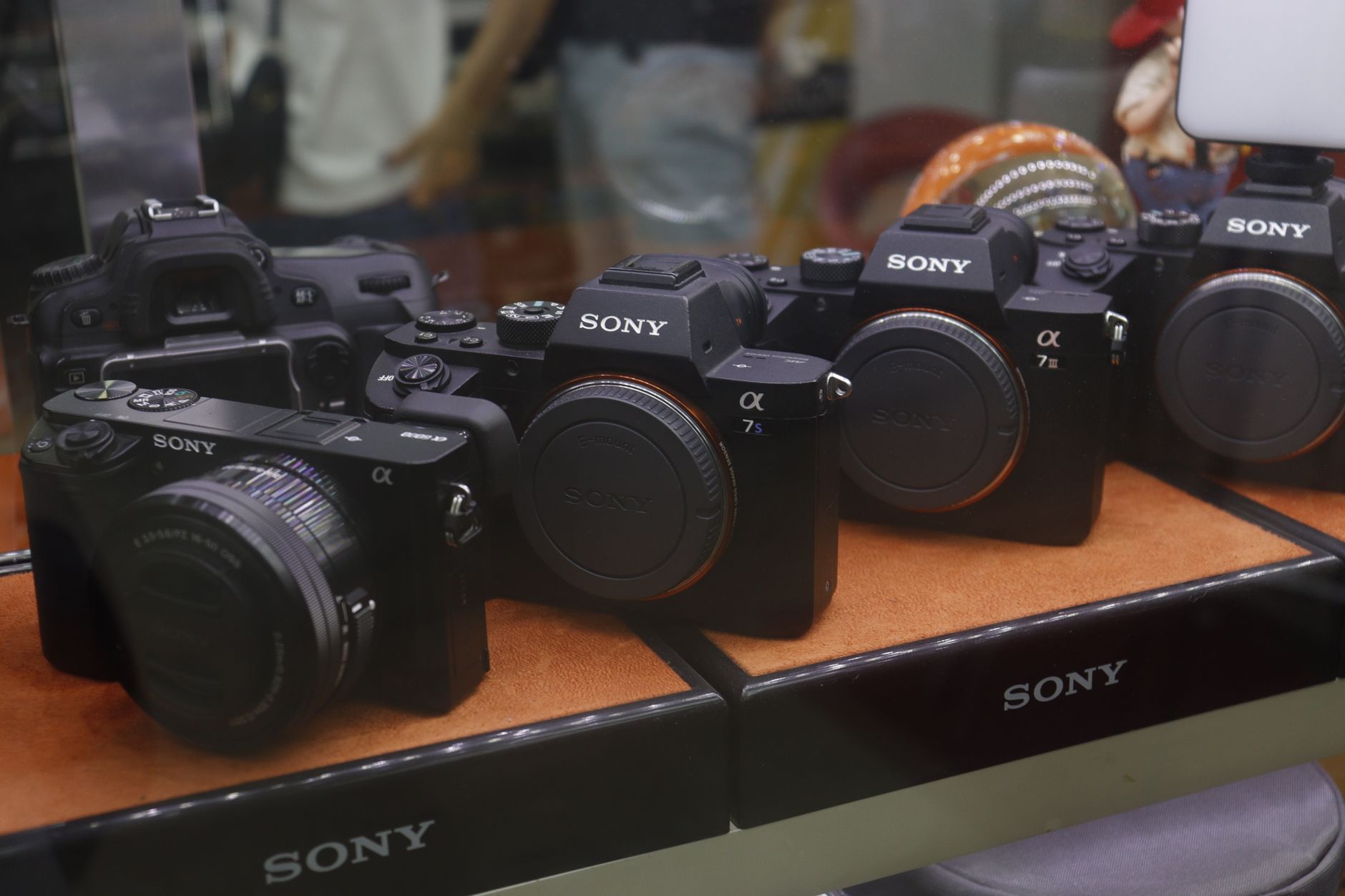
The best full frame camera right now is probably the Sony A7 IV, but that sentence needs a lot of asterisks. If you shoot sports, the Nikon Z6 III makes a stronger argument. If you’re already in Canon’s ecosystem, the EOS R6 Mark II is genuinely hard to walk away from. Full-frame has also quietly shifted: mirrorless bodies have outsold DSLRs since 2022, so every serious pick on this list is mirrorless. The old Canon 5D and Nikon D750 conversations are mostly over.
What I want to do here is match cameras to shooting scenarios, because that’s how this decision actually works. You’re not buying a spec sheet. You’re buying something you’ll carry for three to five years and depend on in bad light, cold weather, or a fast-moving venue.
What Full Frame Actually Buys You
The best full frame camera gives you larger individual photosites than APS-C, which usually means cleaner high-ISO performance and more natural background separation. You’ll notice it most when shooting indoors without flash, at weddings, or anywhere you’re pushing ISO 3200 and above. Below that threshold, a good APS-C camera is genuinely close.
Resolution is a real split in this category. The Sony A7R V sits at 61MP, which matters for commercial work or large prints, but the A7 IV at 33MP and the R6 Mark II at 24MP are faster, cheaper to store, and easier to handle in burst shooting. From what I’ve seen, most working photographers don’t need more than 33MP. The 45MP bodies like the Z8 are for specific use cases, not general shooting.
Full frame also opens up a more useful lens ecosystem: faster primes, wider tilt-shifts, better optical correction at the edges. It’s not free, though. Bodies cost more, lenses cost more, and the bags get heavier.
Top Picks by Shooting Type
Portraits and weddings
The Canon EOS R6 Mark II at $2,499 is the one I’d hand to a wedding photographer without hesitation. Its subject-tracking autofocus is genuinely uncanny, and the dual card slots matter when you’re shooting someone’s ceremony and can’t reshoot anything. Canon pushed a meaningful autofocus firmware update in late 2023 that improved eye-detection in backlit situations, which is exactly the problem weddings throw at you constantly. The 40fps electronic shutter catches expressions other bodies miss.
Travel and documentary
The Sony A7 IV at $2,498 is the most balanced option here. Battery life is 580 shots CIPA (not class-leading, but workable for a day of travel if you carry a spare), and the 33MP sensor gives you enough resolution to crop for a decent 2:3 print. The body is genuinely weather-sealed, and Sony’s 2024 firmware update closed most of the autofocus gap it once had with Canon.
Sports and action
The Nikon Z6 III at $1,996 is the cheapest of the three main contenders and the one to watch for action work. It uses a partially stacked sensor, not fully stacked like the Z9, but closer than the competition at this price, which reduces rolling shutter in electronic shutter mode. CIPA battery is rated at 370 shots, noticeably lower than Sony’s 580, so bring two. But the burst performance and readout speed make it the best sports option under $2,500.
Studio and landscape
If resolution is the priority, neither the A7 IV nor the R6 Mark II is the right answer. The Sony A7R V (around $3,500) or the Nikon Z8 (around $3,300) are the honest picks, both at or above 45MP. That’s a different budget conversation, but worth naming.
How to Choose Between Finalists
The best full frame camera for most people comes down to ecosystem, battery tolerance, and autofocus philosophy. If you have Canon glass, the R6 Mark II is almost certainly your answer. Starting fresh, Sony’s lens lineup is the deepest of the three, though Nikon’s Z-mount glass has improved considerably since 2022.
Battery life is a real differentiator. Sony’s 580-shot rating versus Nikon’s 370 sounds abstract until you’re on hour six of a shoot with one spare. Canon sits in between. None of these ratings reflect heavy real-world use with tracking and live view, so cut all three numbers roughly in half for an honest estimate.
One thing I’m genuinely unsure about is how much the 2024 firmware updates will keep shifting the rankings. Sony has a history of meaningful post-purchase improvements, and the A7 IV is a better camera today than it was at launch. That’s worth something over a five-year ownership window.
FAQs
Is full frame worth it over crop sensor?
For most hobbyists shooting in decent light, probably not at current prices. The gap matters most above ISO 3200 and for selective focus work with fast primes.
Which full frame camera is best for beginners?
The Nikon Z6 III at $1,996 is the most accessible entry point right now, with strong autofocus and a forgiving learning curve compared to Sony’s menu system.
Does full frame make a difference in low light?
Yes, noticeably above ISO 3200. At ISO 800 or below, a modern APS-C body is close enough that most viewers won’t see the difference in a standard print.